Does the sound or vibration of a traditional dental drill make you uneasy? For selected dental problems, another technology may provide a different treatment experience. Air abrasion dentistry uses a controlled stream of air and very fine particles to remove small areas of damaged tooth structure or prepare a tooth for certain restorative procedures. You can learn more about air abrasion and other dental technology used to support precise and comfortable care.
Air abrasion dentistry in McHenry is not intended to replace every traditional dental instrument. However, when the cavity or treatment area is appropriate, it can provide a conservative way to remove decay or prepare a tooth. Understanding how air abrasion works can help patients see why modern dentistry often involves choosing among several tools rather than using the same technique for every tooth.
What Is Air Abrasion Dentistry?
Air abrasion dentistry uses a small handheld device that directs a controlled stream of compressed air and tiny abrasive particles toward the tooth.
These particles contact the treatment area and remove small amounts of tooth structure or surface material. The dentist controls where the stream is directed and how the tooth is prepared.
The basic concept is somewhat similar to carefully polishing or sandblasting a surface, although dental air abrasion is specifically designed for precise use in the mouth.
The process does not rely on a rotating bur to remove tooth structure. Therefore, patients may notice less of the vibration commonly associated with a traditional dental drill.
However, air abrasion has limitations. Certain large cavities, existing restorations, deep areas of decay, or complex preparations may still require traditional instruments.
What Can Air Abrasion Be Used For?
Air abrasion can have several applications depending on the tooth, material, and treatment goal.
It may be used to:
- Remove selected small areas of tooth decay
- Prepare certain teeth for bonding
- Remove some surface stains
- Prepare surfaces before selected restorative procedures
- Assist in repairing certain worn or damaged areas
- Conservatively modify tooth surfaces when appropriate
The dentist evaluates whether air abrasion is suitable based on the size and location of the problem.
For example, a small cavity may be a better candidate than extensive decay involving a large portion of the tooth. When decay needs restoration afterward, a tooth-colored dental filling may be placed to rebuild the area.
How Is Air Abrasion Different From a Dental Drill?
A traditional dental handpiece uses a rotating bur to cut and shape tooth structure. Rotary instruments are highly effective and remain an important part of modern dentistry.
Air abrasion removes material through a stream of tiny particles rather than a rotating cutting surface.
As a result, the sensory experience may be different. Patients may notice less vibration and a different sound compared with a conventional handpiece.
Air abrasion also allows the dentist to focus treatment on a relatively small area in selected cases.
However, traditional rotary instruments provide advantages when a tooth needs extensive shaping, when old restorative material must be removed, or when the treatment area is not well suited to abrasion.
Modern dentistry is therefore not a competition between the two methods. The dentist chooses the instrument that best matches the procedure.
Can Air Abrasion Treat Cavities?
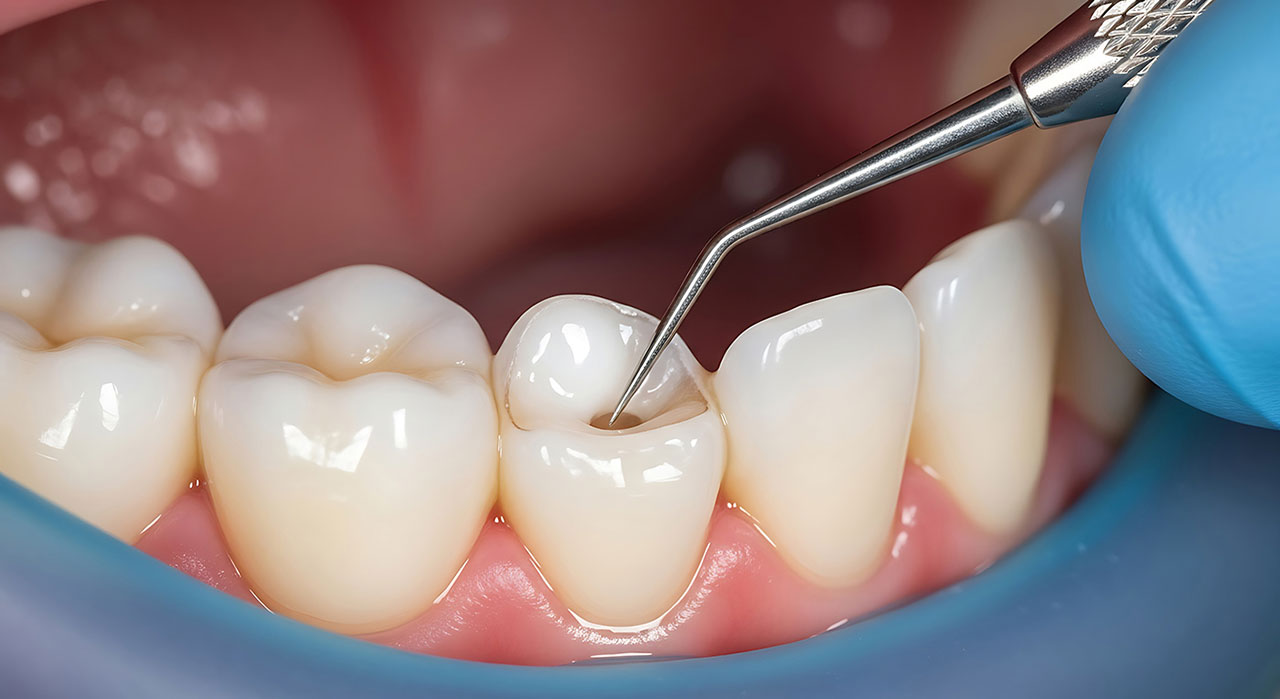
Air abrasion may be used to remove selected areas of tooth decay, particularly when the cavity is small and accessible.
After the damaged tissue is removed, the tooth can be evaluated and restored as needed.
A composite filling may then be bonded into the prepared area. Because composite material is tooth-colored, the restoration can be selected to coordinate with surrounding enamel.
Larger cavities may require a different approach. If decay extends deeply, affects multiple surfaces, or has weakened a significant amount of the tooth, traditional preparation or a larger restoration may be necessary.
The dentist determines the appropriate method after examining the extent of decay and the remaining healthy tooth structure.
Will Air Abrasion Dentistry Eliminate the Need for Anesthetic?
Some patients may be able to undergo selected air abrasion procedures with little or no local anesthetic. However, this depends on the treatment.
The depth of the cavity, sensitivity of the tooth, amount of structure being removed, and individual comfort level all matter.
A shallow treatment area may feel very different from deeper decay near sensitive internal tissues.
Therefore, the goal should not be to avoid anesthetic at all costs. The goal is to provide comfortable, effective treatment.
If local anesthesia is recommended, it can help ensure that the procedure remains comfortable regardless of which instrument is being used.
What Does Air Abrasion Feel Like?
Patients commonly want to know what they will experience during air abrasion dentistry.
Rather than the rotating sensation of a drill, the treatment involves a focused stream directed at the tooth. The dental team uses suction and other protective measures to manage the fine particles and debris produced during the procedure.
You may hear air movement and feel activity around the tooth, but the experience is different from traditional drilling.
The dentist may also isolate the tooth or protect nearby tissues, depending on the procedure.
If you feel uncomfortable at any time, let the dental team know. Patient feedback remains important even when a minimally invasive technology is being used.
Benefits of Air Abrasion Dentistry
Air abrasion dentistry can offer several advantages when it is appropriate for the treatment being performed.
- Reduced vibration: Air abrasion does not use a rotating bur, so patients may experience less of the vibration associated with drilling.
- Conservative treatment: The technology can allow targeted removal of selected damaged areas.
- Useful for small cavities: Early areas of decay may sometimes be treated with air abrasion when their size and location are suitable.
- Potentially less anesthetic: Some shallow procedures may require little or no numbing, although this varies.
- Restorative versatility: Air abrasion may be used to prepare selected tooth surfaces for bonding and other restorative procedures.
- Different sensory experience: Patients who dislike the sound and vibration of a drill may find air abrasion more comfortable.
- Surface preparation: The technology may help create an appropriate surface for certain bonded restorations.
- Support for tooth preservation: Conservative preparation can help preserve healthy tooth structure when clinically appropriate.
Air abrasion does not automatically make a procedure painless or guarantee that traditional instruments will not be needed. Its benefit comes from giving the dentist another treatment option for carefully selected cases.
Who May Be a Good Candidate for Air Abrasion?
Patients with small, localized areas of decay may be potential candidates. Air abrasion can also be considered for selected cosmetic or restorative surface preparations.
Someone who is particularly sensitive to the noise or vibration of a dental handpiece may also appreciate discussing whether air abrasion is appropriate.
However, candidacy depends more on the tooth than on patient preference alone.
The dentist needs to consider the location of the cavity, depth of decay, type of existing restoration, amount of healthy structure remaining, and final restoration planned.
A patient may have one tooth that is an excellent candidate for air abrasion and another tooth that requires traditional preparation.
When Is Air Abrasion Not the Best Choice?
Air abrasion is not ideal for every restorative procedure.
Large cavities may require more extensive shaping than abrasion can efficiently provide. Likewise, removing certain existing fillings or crowns may require rotary instruments.
Deep decay near the pulp can also create different treatment needs.
In addition, some restorative designs require precise shapes or margins that are better created using other instruments.
The dentist may combine air abrasion with conventional techniques if doing so provides a better result.
This flexible approach allows technology to serve the treatment rather than forcing every procedure into one technique.
How Does Air Abrasion Support Minimally Invasive Dentistry?
Minimally invasive dentistry focuses on preserving healthy natural tooth structure whenever possible.
This philosophy does not mean avoiding necessary treatment. Instead, it means removing disease while limiting unnecessary alteration of healthy tissues.
Air abrasion can support this approach because the stream can be directed at selected areas when the cavity is small and accessible.
Early diagnosis also matters. A cavity discovered when it is small may provide more opportunities for conservative treatment than one that has been allowed to grow for years.
This is another reason routine examinations remain important. Modern treatment options are often most useful when problems are identified at an earlier stage.
Can Air Abrasion Remove Stains?
Air abrasion technology may be used for certain surface stains, depending on the type and location of discoloration.
However, not every tooth stain is located on the surface. Internal discoloration develops within tooth structure and requires a different cosmetic approach.
Likewise, patients should not assume that stain removal and professional teeth whitening are the same procedure.
The dentist can evaluate the cause of discoloration and recommend an appropriate option. In some situations, surface polishing or air abrasion may help. In others, whitening, bonding, veneers, or another cosmetic treatment may be considered.
What Happens After Air Abrasion Treatment?
Post-treatment care depends on what procedure was completed.
If air abrasion was used before a composite filling, the restoration will be shaped and polished after the cavity is repaired.
If the procedure involved surface preparation for bonding, the dentist will continue with the restorative or cosmetic treatment.
Patients should follow any instructions provided for eating, brushing, sensitivity, or anesthesia.
Even after a cavity has been treated, the surrounding tooth remains susceptible to future decay. Therefore, daily brushing, interdental cleaning, fluoride use, and routine professional care remain important.
Frequently Asked Questions About Air Abrasion Dentistry
Does air abrasion dentistry hurt?
Many small air abrasion procedures can be comfortable, although the experience depends on cavity depth, tooth sensitivity, and the type of treatment. Local anesthetic may still be recommended.
Can air abrasion replace the dental drill completely?
No. Air abrasion is useful for selected procedures, but traditional dental handpieces remain necessary for many larger or more complex restorations.
Can air abrasion treat every cavity?
No. Small and accessible cavities may be suitable, while deeper or larger areas of decay may require other techniques.
Will I still need a filling after air abrasion removes decay?
If decay has created a structural defect in the tooth, the area usually needs to be restored after the damaged tissue is removed.
Can air abrasion be used for cosmetic dentistry?
Air abrasion may be useful for selected surface preparation or stain removal procedures. The dentist determines whether it is appropriate for the specific cosmetic treatment.
Explore Conservative Dental Treatment in McHenry
Air abrasion dentistry offers another way to treat selected small cavities and prepare tooth surfaces while reducing some of the vibration associated with traditional drilling. Although it is not suitable for every procedure, it can support conservative dental care when the size, location, and condition of the tooth make it a good option.
To learn whether air abrasion dentistry may be appropriate for your dental needs, call Unique Smiles of McHenry at (815) 385-0777. Visit us at 4101 W Shamrock Ln, McHenry, IL 60050, or Book an Appointment for personalized restorative care.